12: Aware of Being Unaware
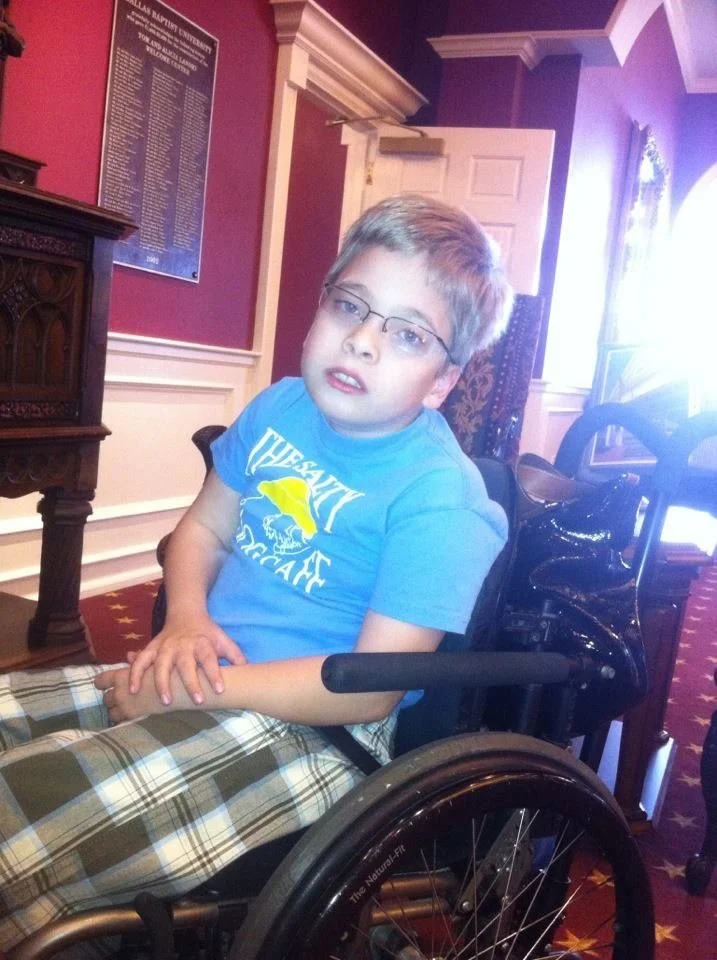
Me when people aren’t aware of CP. Just kidding!
Logan here.
Welcome to the March 2026 edition of Writer on Wheels. If you’ve been following along with my posts or even just the title of the blog itself, you probably know that I am a wheelchair user. You may also know that all my life, I have had a condition known as cerebral palsy (CP). This blog exists, in part*, to give insight into my own personal experiences with CP and the opportunities it has given me to grow spiritually, emotionally, even physically. Since March is National Cerebral Palsy Awareness Month and the 25th of March is Cerebral Palsy Awareness Day, I thought it appropriate to explore not only my personal journey with this condition, but also how I need to continually grow in understanding the larger CP community.
When I share with people about my disability for the first time, I usually provide some or all of the following facts:
I was born 3 months early. Due to my prematurity, my body/brain didn’t form and develop typically.
My legs and right hand/arm don’t have full function. I have feeling in my limbs and can stand and walk with assistance, just not total independence.
My muscles are in a constant spectrum of tightness, and they get especially tight when I’m tense, frustrated, startled**, in pain, tired, and even excited. You will see my right arm pulled in towards me, with my hand up against my chest. Over time, the muscle has contracted, so it’s constantly in that flexed position.
As you can see below, cerebral palsy is relatively common, yet presentations can vary widely, affecting different parts of the body. I know individuals with this condition who are nonverbal, some who are more mobile than me and can walk with crutches, etc. I realize I operate from a place of privilege in a few different ways. For one, I have a wonderful support system in my community. Friends and family are able to help me go about my day-to-day, whether that’s in terms of helping with hygiene, transportation, or making sure I’ve had access to quality therapy services and programs. Additionally, my CP manifests more in my muscles rather than cognition, so I can speak, write and type on my own. My left hand is functional enough to help me do just about everything from a fine motor standpoint. I’ve been able to participate in a lot of predominantly “able-bodied” environments, such as mainstream classrooms rather than special education. As a result, the vast majority of my peers don’t have a disability.
God has been working on me in recent years to not let my level of ability become a source of pride. I admit I’ve often felt more accomplished, smarter or somehow better off than others with CP and disabilities as a whole, not making significant effort to learn from, interact with the community, distancing myself. Embarrassingly, I’m even reminded of moments from my past where I’ve made jokes about disabled peers to others. I think, especially while growing up, I felt the able-bodied world was largely easier, more comfortable, familiar. There’s so much about CP that I don’t know or haven’t been exposed to. You could say I’ve gained awareness of just how unaware I am.
On one hand, there can be common ground: I’m sure there’s not a single person with CP or a different disability that hasn’t had an experience where they’ve felt limited or marginalized. For example, it’s not unheard of for a hotel bathroom or public space to be extremely cramped and inconvenient, despite being labeled as accessible. Also, (and this one may sting a bit for you, dear reader, but I say it with love), please be careful using terms like “inspiration” or talking down to an individual with a disability. I’ve been called an inspiration by strangers, while I’m going about my day, just existing. A man I never met came up to me and Gia on our first date and told me I was going to do great things with my life. (How did he know?) Other times, strangers have come up to me for fist bumps or high fives like I’m a little kid or direct questions about me towards my parents, assuming I can’t communicate with them. Assumptions like these can be harmful, embarrassing, frustrating, and off-putting. Treat people with care, don’t be quick to condescend! I appreciate Jesus’ teaching moment from John 9:1-3 that speaks to this idea:
As he passed by, he saw a man blind from birth. And his disciples asked him, “Rabbi, who sinned, this man or his parents, that he was born blind?” Jesus answered, “It was not that this man sinned, or his parents, but that the works of God might be displayed in him. (ESV)
I believe this verse can speak to both my able-bodied readers as well as anyone with a disability who may be reading. Every individual, with every experience of CP, is valuable to God and is not excluded from His design. You might think, isn’t Jesus kind of saying the disabled individual in the passage is an inspiration, too? How is this different than those negative experiences you mentioned earlier? I would offer this counterpoint: every human is made in God’s image and thus displays His glory, so rather than identifying the disabled individual as somehow “special,” I think Jesus is centering his humanity, illustrating his value as equal to able-bodied peers.
Hear me say that God is still refining me, too. I’ve had more opportunities, such as with my job working at a PT, OT and Speech clinic, to engage with others affected by CP, to befriend them, support them, bond with them in shared experiences, not pulling away or feeling sorry for them because of differences. I’ve adopted the idea that the best form of advocacy I can participate in is sharing my own story, explaining my own limitations. That is what I know best, and I believe it would be unfair to act like I can speak for everyone with this condition. However, I have grown in my ability to have healthy dialogue with others, whether they’re learning from me or me from them. Ask me about my disability, even if it feels uncomfortable.
This Cerebral Palsy Awareness Month, I’m aware that I’m unaware, and that’s a great place to start.
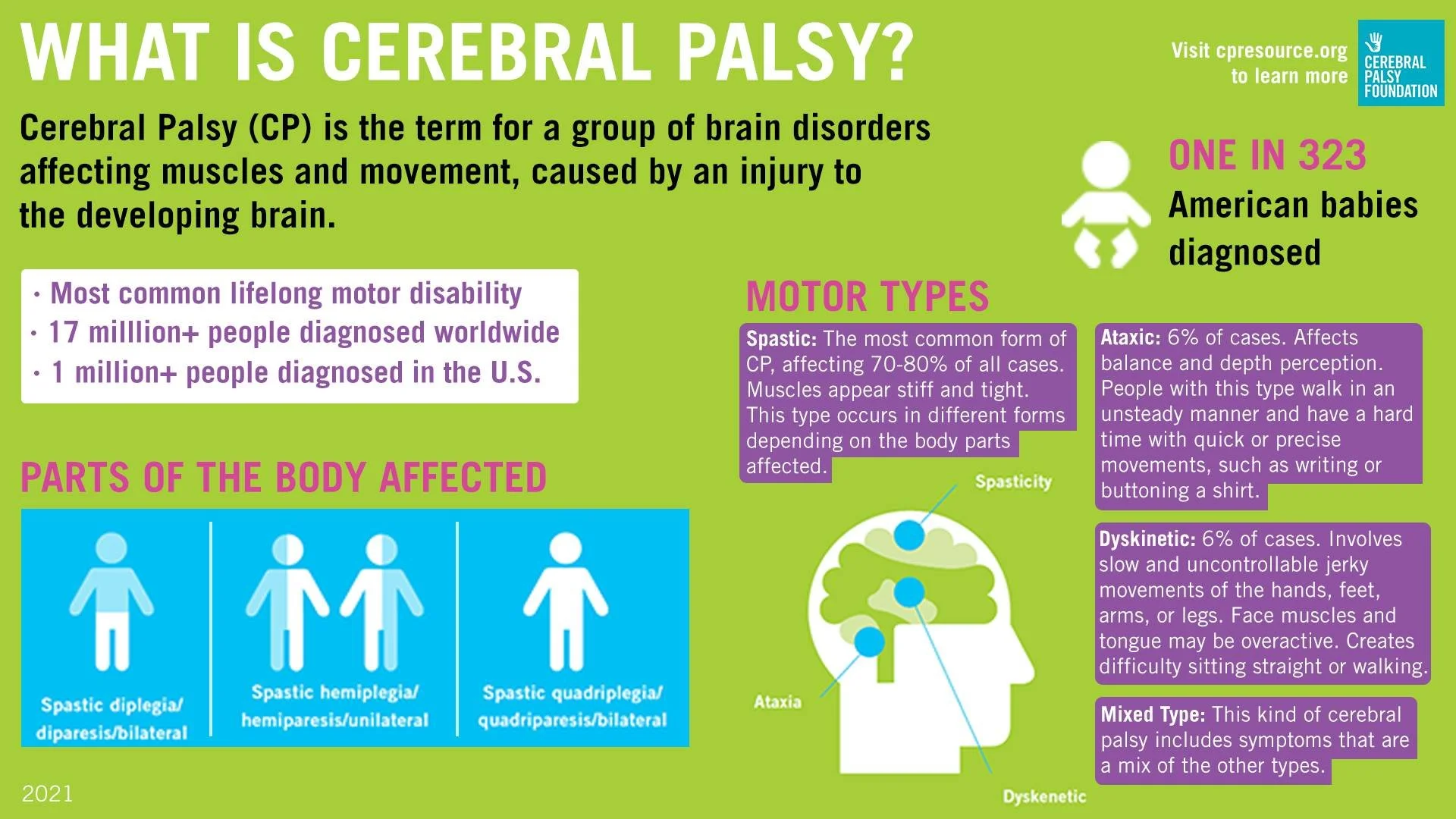
credit: Cerebral Palsy Foundation